
Where to Find Wild Mushrooms in the Kent Downs
6th November 2026
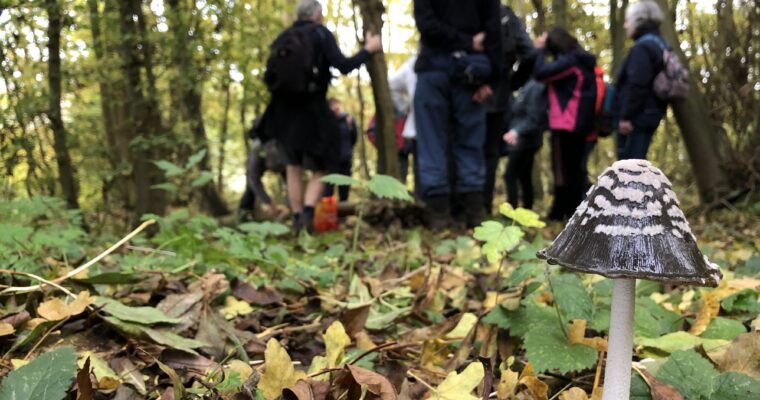
Autumn is a great time to slow down and explore the woodlands of the Kent Downs. After a spell of rain, the woodland floor can come alive with fungi in all sorts of shapes, sizes and colours. Look closely and you might spot tiny mushrooms tucked beneath fallen leaves, bright caps growing among the moss or bracket fungi spreading across old tree trunks.
You don’t need to know the name of every mushroom to enjoy spotting them. Take your time, look along the paths and see what you can find. Here are seven places in the Kent Downs where you can enjoy a walk and keep an eye out for wild fungi.
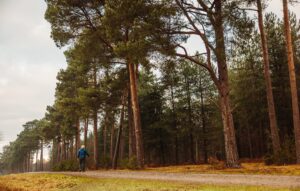
One of the largest ancient woodlands in the Kent Downs, King’s Wood covers around 1,500 acres near Challock. Its mix of broadleaved trees and conifers creates a rich woodland habitat, with plenty to discover throughout the year.
Autumn and winter are particularly good times to look out for fungi. Keep an eye on the woodland floor, especially around mossy patches, fallen leaves and old tree trunks. You might spot the distinctive red cap of a Fly Agaric, with its bright white spots, standing out against the autumn colours. This striking mushroom is often found beneath birch and pine trees, where it forms a close relationship with their roots.
You may also come across bracket fungi growing on older trees and fallen wood. These often have distinctive shapes and patterns, making them interesting to photograph.
There are several paths to explore, so you can enjoy a longer walk through the trees or take a slower route and see what you can spot along the way.
-
Denge Wood, near Garlinge Green
Denge Wood is another great place to enjoy the quieter side of the Kent Downs. This ancient woodland has a mix of trees and habitats, making it a good place to look closely at the woodland floor.
After rain, keep an eye out for mushrooms appearing among the leaf litter, moss and decaying wood. Look out for Turkey Tail, a colourful bracket fungus which grows in overlapping layers on dead wood. You might also spot Yellow Stagshorn, a bright yellow, branching fungus often found on decaying conifer stumps.
Some fungi have close relationships with particular trees, while others help break down dead wood and return nutrients to the soil.
Take your time as you follow the woodland paths. Some of the smallest fungi are easy to miss if you’re walking too quickly.
-
Gorham and Admiral Woods, Bicknor
Gorham and Admiral Woods cover around 85 acres near Bicknor and are home to an impressive variety of fungi, with more than 400 species recorded in the woods.
The different woodland habitats provide plenty of places for fungi to grow. Look around fallen branches, damp leaf litter and older trees, where you may find mushrooms and other fungi growing in clusters or on decaying wood.
Some interesting British woodland species to learn about include Common Bonnet, which can grow on decaying wood, and Hairy Curtain Crust, a bracket fungus often found on dead branches and fallen trees. These are examples of the different forms fungi can take, from delicate mushrooms to spreading crusts on old wood.
With so many species recorded here, it’s a good place to take a closer look at the variety of fungi found in our woodlands. Bring your camera and see how many different shapes and colours you can find.
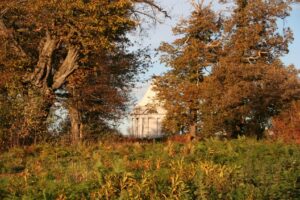
Cobham Woods is a large woodland area covering around 242 hectares, with a mix of ancient woodland and open spaces. Its veteran trees and areas of wood pasture provide important habitats for fungi and other wildlife. Cobham Woods is also part of the North Kent Woods and Downs National Nature Reserve, which brings together some of the area’s most important woodland and chalk grassland habitats.
Look along the woodland floor and around older tree trunks for mushrooms, bracket fungi and other unusual growths. One species to look out for is Beefsteak Fungus, recognisable by its reddish-brown colour and unusual, fleshy texture. It grows on oak trees and can sometimes resemble a piece of raw meat.
Turkey Tail is another interesting example of a bracket fungus. Its fan-shaped caps grow in overlapping layers on dead wood, often displaying several different colours.
The woodland has plenty of paths to explore, so there’s time to enjoy the changing colours of autumn while keeping an eye out for what’s growing beneath the trees.
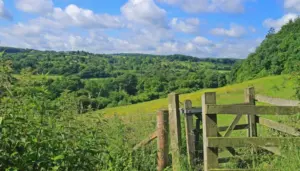
Queendown Warren is best known for its chalk grassland, but the reserve also has areas of scrub and woodland to explore. Its mix of habitats makes it an interesting place to look for different kinds of wildlife.
Keep an eye out for fungi along the edges of wooded areas and among the leaf litter. The open grassland also offers a different setting from the larger woodlands. In suitable undisturbed grassland, you might find waxcaps, a group of fungi known for their brightly coloured caps and often slippery surfaces.
As you explore, take a moment to enjoy the views across the surrounding countryside and the quieter paths through the reserve.
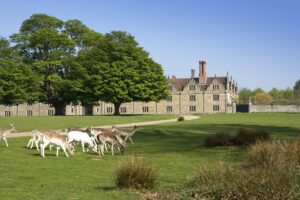
Knole Park is a great place for an autumn walk, with ancient trees, open parkland and plenty of space to explore. The landscape changes with the seasons, and its veteran trees and woodland areas provide important habitats for fungi.
Hundreds of fungi species have been recorded in the park, including Amethyst Deceivers, Beefsteak Fungus, Saffrondrop Bonnets and Fairy Fingers.
The Amethyst Deceiver is particularly striking, with its vivid purple cap, while Saffrondrop Bonnets are much smaller and can be easy to overlook among the leaf litter. Fairy Fingers has a distinctive branching appearance, making it an interesting find.
Look carefully among the leaves and around older trees, as some fungi can be surprisingly small. After exploring the woodland, enjoy a walk through the open parkland and take in the views across the surrounding landscape.
Please remember that foraging is not permitted at Knole Park, so leave all fungi where you find them.
-
Yockletts Bank, near Petham
© RSPB
Yockletts Bank is a Kent Wildlife Trust nature reserve near Petham, with ancient woodland and a rich variety of wildlife. Its mix of woodland trees and understorey creates a range of habitats for plants, fungi and other wildlife.
Woodlands like Yockletts Bank provide important habitats for fungi, particularly where fallen wood and leaf litter are left to break down naturally. Look around the base of trees and along the woodland floor for different colours, shapes and textures.
You might also spot bracket fungi growing on fallen branches or unusual growths on older trees. Keep your eyes open for King Arthur’s Cakes, a dark, rounded fungus which can grow on dead wood, particularly beech.
Remember to take your time and look closely. You may find something interesting just a few steps from the path.
A closer look at fungi and the trees they grow with
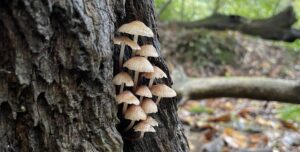
Some fungi have special relationships with trees. Known as mycorrhizal fungi, they connect with tree roots and help exchange nutrients, supporting the health of both the tree and the fungus.
Different fungi are associated with different trees. Fly Agaric, for example, is often found beneath birch and pine trees. Brown Birch Bolete is associated with birch, while Beechwood Sickener grows beneath beech trees. Hen of the Woods is another distinctive species, often found growing around the base of mature oak trees.
Other fungi, such as Turkey Tail, grow on dead wood and help break it down, returning nutrients to the woodland soil. Both types play an important part in keeping woodland ecosystems healthy.
A few things to remember when looking for wild mushrooms
Fungi are an important part of our woodland ecosystems. They help break down dead wood and fallen leaves, returning nutrients to the soil, while others form partnerships with trees and support their growth.
Some of the most striking mushrooms in our woodlands are also poisonous. Fly Agaric, Deathcap and Destroying Angel are all members of the Amanita genus. Deathcap and Destroying Angel are particularly dangerous and can be deadly if eaten.
If you’re out looking for mushrooms, here are a few simple ways to enjoy them responsibly:
- Leave fungi where they are so they can continue to support woodland ecosystems and wildlife.
- Never eat wild mushrooms. Some poisonous species look very similar to edible ones, and identifying them incorrectly can have serious consequences.
- Photograph the fungi you spot and enjoy their different colours, shapes and textures.
- Stick to paths and avoid trampling delicate habitats or disturbing wildlife.
- Check site access information before setting off, as some places have specific restrictions.
Popular articles
The Best Viewpoints in the Kent Downs
Searching for incredible views? Look no further! We've rounded up the best…
Top 6 bluebell walks in the Kent Downs
If you're looking for inspiration on the best places for some bluebell…
Lambing season in the Kent Downs
Discover the importance of lambing season in the Kent Downs and find…