
Early summer orchids in the Kent Downs
11th May 2026
Orchids are some of the most impressive wildflower species found in the UK, with their distinctive flowers making them easy to spot. There are around 52 different species in Britain, and around 25 of these can be found in the Kent Downs National Landscape. This designated Area of Outstanding Natural Beauty is the only place in Britain where wild orchids such as the late spider orchid and lady orchid can be found. In fact, it’s the iconic chalky grassland, that’s low in nutrients, combined with our warm climate that makes the Kent Downs one of the best regions in the country for orchids (hence why our logo is an orchid!).
So, if you fancy a spot of wild orchid-hunting this summer, here’s our top five orchids to look out for in July and where to find them:
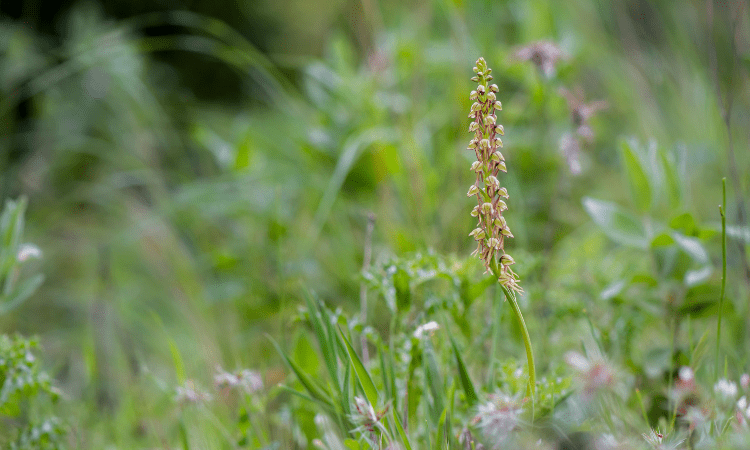
Man Orchid (May to July)
The endangered man orchid is one of the rarest orchids found in the Kent Downs. Each flower resembles a tiny human figure, giving the species its unusual name.
This orchid grows in scattered locations across chalk grassland and woodland clearings in south-east England. Spotting one in the wild is a special experience for orchid enthusiasts.
Look for: greenish flowers with long lobes shaped like arms and legs.
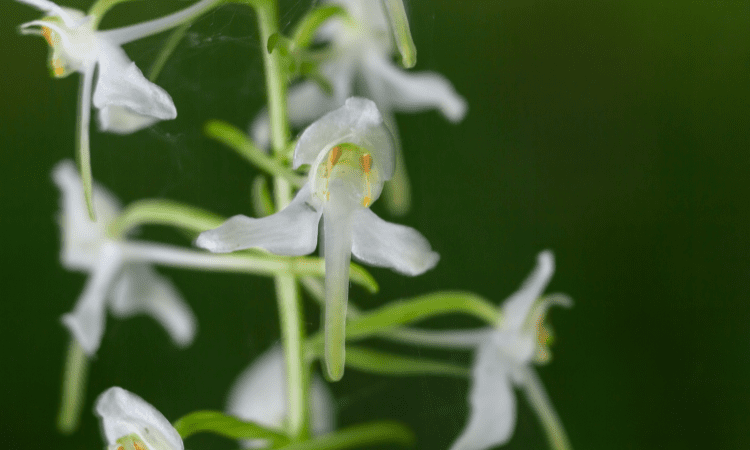
Greater Butterfly Orchid (May to July)
Elegant and lightly scented, the greater butterfly orchid produces tall spikes of pale green-white flowers. The shape of the petals resembles butterfly wings, especially in evening light.
This orchid is found in grasslands, woodland edges and nature reserves across the British Isles and flowers during early summer.
Look for: tall stems carrying soft white flowers with a delicate glow.
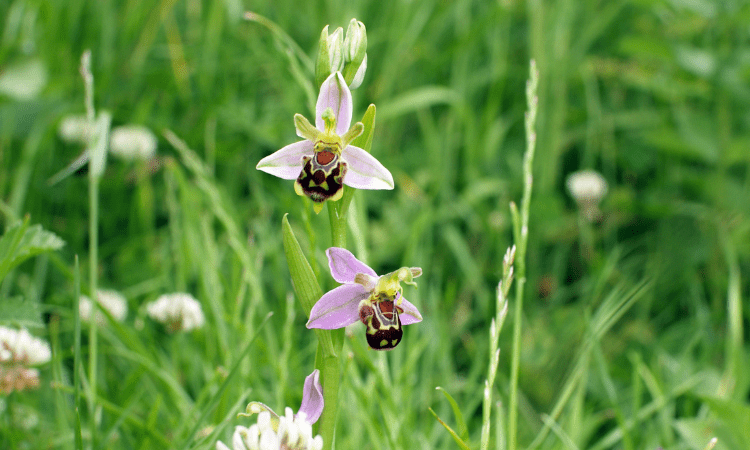
Bee Orchid (June to July)
The bee orchid is one of the UK’s most recognisable wild orchids. Its flower closely resembles a bumblebee, helping attract pollinators through mimicry. In Britain, bee orchids often self-pollinate, but their unique appearance still makes them a favourite among nature lovers and photographers.
Bee orchids usually flower during June and July and can often be seen growing in chalk grassland, roadside verges and sunny open spaces.
Look for: pink petals surrounding a velvety brown flower shaped like a bee.
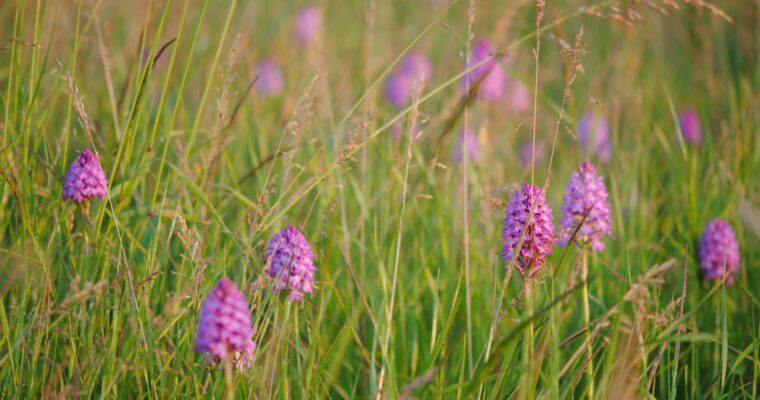
Pyramidal Orchid (June to August)
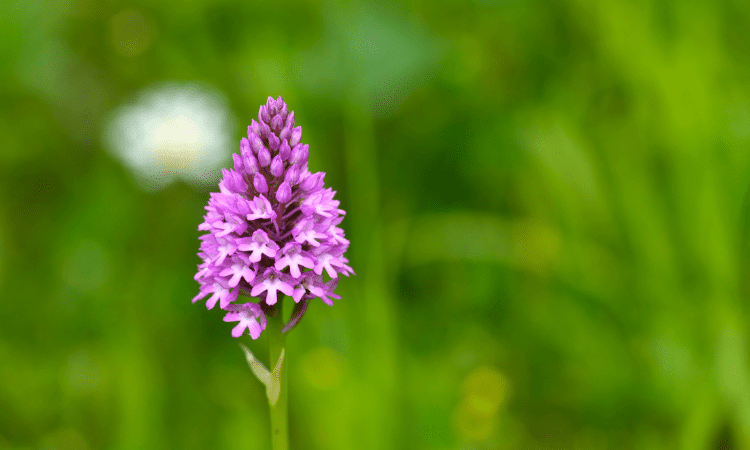
The pyramidal orchid is widespread across the Kent Downs and instantly recognisable thanks to its bright pink flower head, which begins in a pointed pyramid shape before opening out.
This species thrives in chalk grasslands, meadows, coastal habitats and roadside verges. It flowers throughout summer and adds striking colour to grassland landscapes.
Look for: dense clusters of vivid pink flowers on tall stems.
Common Spotted-orchid (June to August)
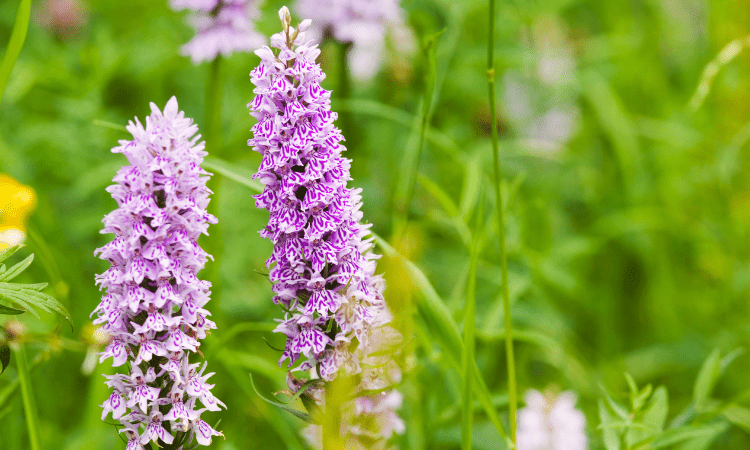
As its name suggests, the common spotted orchid is one of the UK’s most widespread orchid species. Its leaves are marked with distinctive dark spots, while the flowers range from pale pink to rich purple.
This orchid attracts a variety of pollinators, including moths and butterflies, and can often be found in damp grassland and open countryside across the Kent Downs.
Look for: spotted leaves and delicate purple-pink flowers.
Where to see orchids in the Kent Downs?
If you’re keen to try and spot wild orchids for yourself, here’s a selection of sites in the Kent Downs where you’re likely to find them:
Queendown Warren Nature Reserve
Located south of the M2 between Sittingbourne and Chatham, Queendown Warren stretches across 76ha of valley landscape. Once a medieval rabbit warren, the chalky slopes of the reserve are now a haven for wildlife. The site is renowned in Kent for its orchids, with 10 species recorded here, including bee, pyramidal, man and early spider-orchid.
Yockletts Bank Nature Reserve
Yockletts Bank, near Stelling Minnis, is a must-visit site for orchid lovers. Managed by the Kent Wildlife Trust, the ancient woodland and chalk grassland here is a designated Site of Special Scientific Interest (SSSI). Here you can find colonies of fly, common spotted, early-purple and the endangered lady orchid.
Park Gate Down
Nestled in the Elham Valley, Park Gate Down is a small reserve, and another Site of Special Scientific Interest (SSSI) managed by the Kent Wildlife Trust. The ancient chalk grassland here is teeming with flora. Look out for bee, common spotted, pyramidal, greater butterfly, and the rare monkey orchid.
Samphire Hoe
Created during the construction of the Channel Tunnel, Samphire Hoe is a nature reserve on the outskirts of Dover. It’s home to over 200 species of plant and wildflower, including several orchid species. You can visit here to look for early-spider, common spotted, pyramidal, and bee orchids.
Bonsai Bank
Bonsai Bank forms part of Denge Wood, located to the south of Canterbury, and is owned by the Woodland Trust and Forestry Commission. This small glade amongst stunted conifers is home to impressive colonies of lady orchid, as well as early purple, common spotted and greater butterfly orchid.
Remember to respect, protect and enjoy
Wild orchids are sensitive plants and many species are under pressure from habitat loss, climate change and declining biodiversity.
If you spot orchids in the Kent Downs:
- Stay on marked paths where possible
- Avoid stepping into grassland areas around the flowers
- Never pick or damage orchids
- Take photographs responsibly without disturbing wildlife
By helping protect these habitats, we can ensure future generations continue to enjoy the incredible diversity of orchids found across the Kent Downs National Landscape.
Popular articles
The Best Viewpoints in the Kent Downs
Searching for incredible views? Look no further! We've rounded up the best…
Top 6 bluebell walks in the Kent Downs
If you're looking for inspiration on the best places for some bluebell…
Lambing season in the Kent Downs
Discover the importance of lambing season in the Kent Downs and find…