
Late summer orchids in the Kent Downs

22nd June 2026
Orchids are some of the UK’s most fascinating wildflowers, with their unusual shapes, delicate colours and incredible adaptations making them a favourite among nature lovers. Around 52 orchid species can be found across Britain, with around 25 species recorded in the Kent Downs National Landscape.
The Kent Downs is an important landscape for wild orchids in Kent, thanks to its rare chalk grasslands, ancient woodlands and warm climate. These nutrient-poor chalk habitats create the perfect conditions for a wide variety of wildflowers and support some of Britain’s most special orchid species.
From woodland helleborines to tiny autumn blooms, late summer is a wonderful time to explore the Kent Downs and discover these beautiful wildflowers.
Where do orchids grow in the Kent Downs?
The unique chalk geology of the Kent Downs plays an important role in supporting orchid-rich habitats. The thin, alkaline soils of chalk grasslands provide ideal conditions for many wildflowers, while ancient woodlands offer habitats for woodland orchid species.
Orchids can be found across a range of habitats, including chalk downlands, woodland edges, grasslands and nature reserves. Sites such as Queendown Warren, Yockletts Bank, Park Gate Down and Samphire Hoe are known for their rich wildlife and wildflower diversity.
Late summer orchids to look out for
The best time to see late summer orchids is usually between July and September, when woodland paths, chalk grasslands and open countryside can reveal some of the Kent Downs’ smaller botanical treasures.
Violet Helleborine
The violet helleborine is a stunning orchid, characterised by its violet-coloured stems and greenish-pink flowers. These orchids thrive in shaded woodlands, often under beech trees. Unlike other orchids that rely heavily on insects for pollination, the violet helleborine often self-pollinates. You can find this beautiful species blooming from July to September, adding a splash of colour to the dappled woodland light of the Kent Downs.
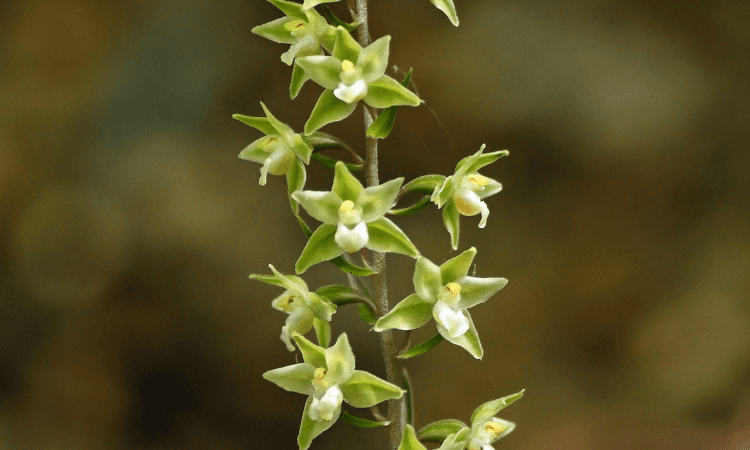
Green-flowered Helleborine
As the name suggests, the green-flowered helleborine boasts delicate green flowers that blend seamlessly with its leafy surroundings. This orchid favours chalky soils and can often be spotted along woodland edges and shaded paths. Flowering from July to August, it’s a late-summer gem that rewards keen eyes with its subtle beauty. Look out for it in the more shaded and less trodden paths of the Kent Downs.
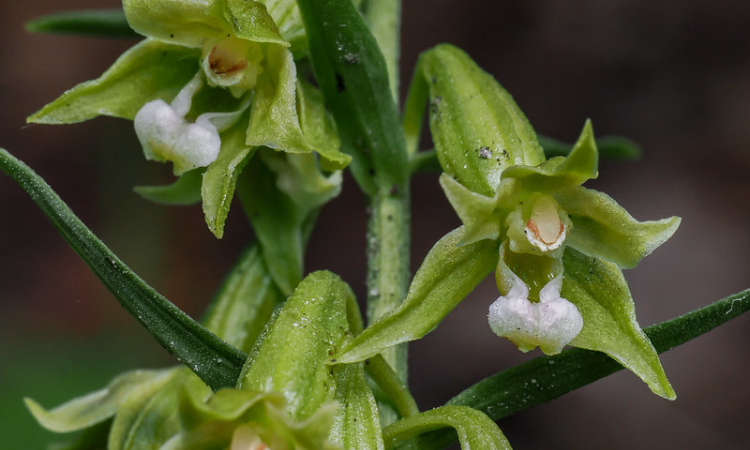
©Keith DP Wilson
Broad-leaved Helleborine
The broad-leaved helleborine is a resilient species that can adapt to a variety of habitats, from woodlands to grassy clearings. It features broad, glossy leaves and flowers that range from pale green to a blush of pink. This orchid is known for its intriguing relationship with wasps, which are its primary pollinators. The broad-leaved helleborine blooms from July to September, making it a late-summer delight in the diverse landscapes of the Kent Downs.
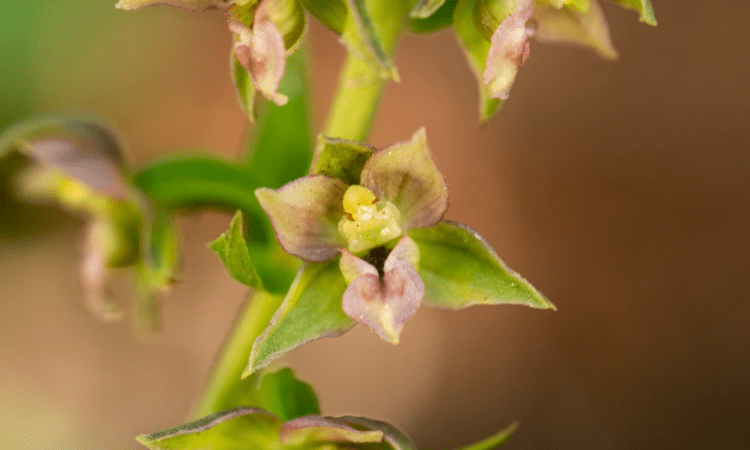
Autumn Lady’s-tresses
One of the latest-blooming orchids in the UK, the autumn lady’s-tresses is a charming sight with its spiralling white flowers. This petite orchid prefers dry, grassy habitats and can often be found in chalk grasslands and limestone pastures. Flowering from August to October, it’s a perfect reason to extend your orchid-hunting season into the autumn. Its delicate spiral of blossoms is a lovely contrast to the fading summer foliage in the Kent Downs.
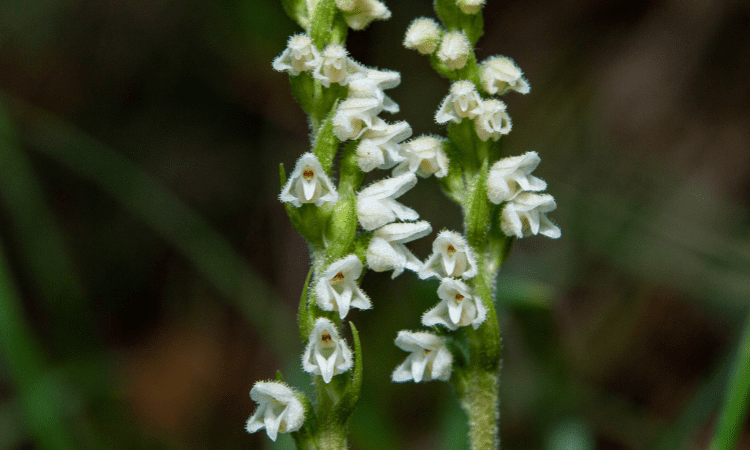
Why are orchids important?
Wild orchids are more than beautiful flowers. They are indicators of healthy habitats and are closely connected to the wider ecosystems of chalk grasslands and woodlands.
The same landscapes that support orchids also provide homes for butterflies, bees, birds and many other species. Protecting these habitats helps conserve the wider biodiversity of the Kent Downs.
Respect, protect and enjoy
Many orchid species depend on fragile habitats that can be damaged by changes in land use, climate change and biodiversity loss.
If you spot orchids while exploring the Kent Downs, please help protect them by:
- Staying on marked paths where possible
- Avoiding trampling plants and delicate chalk grasslands
- Never picking orchids or removing wildflowers
- Taking photographs carefully without disturbing wildlife
By caring for these special landscapes, we can help ensure the Kent Downs continues to support its incredible variety of wild orchids for generations to come.
Popular articles
The Best Viewpoints in the Kent Downs
Searching for incredible views? Look no further! We've rounded up the best…
Top 6 bluebell walks in the Kent Downs
If you're looking for inspiration on the best places for some bluebell…
Lambing season in the Kent Downs
Discover the importance of lambing season in the Kent Downs and find…