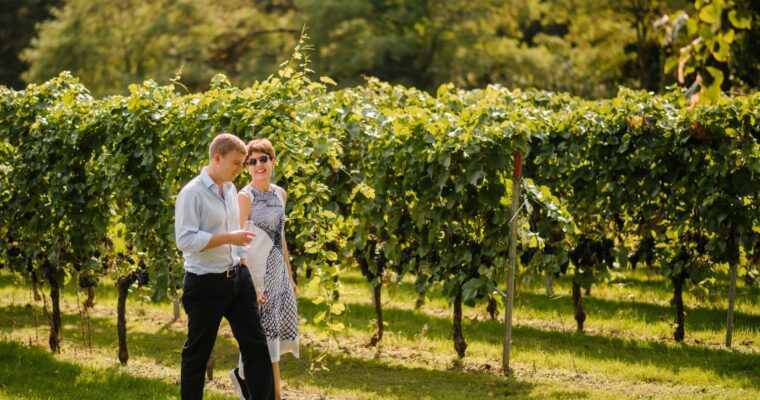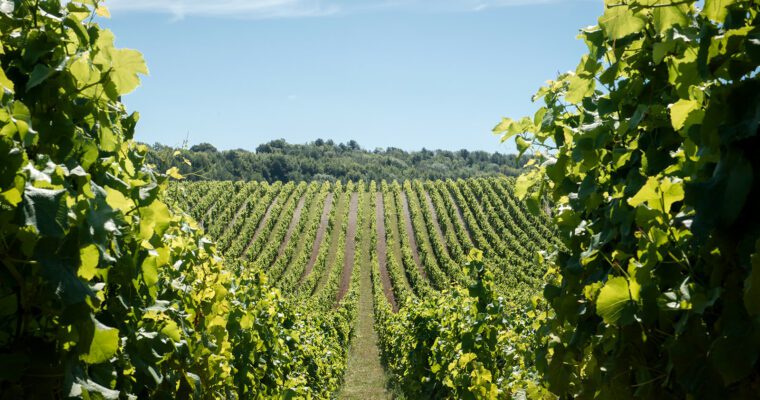
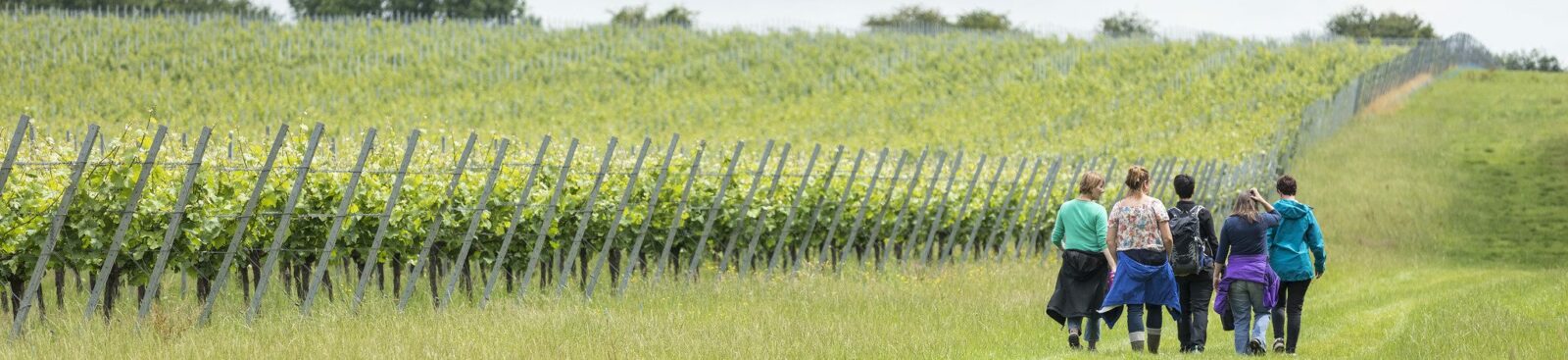
Viticulture is an increasingly important land use within the Kent Downs National Landscape. Vineyards are often located on the scarp slopes of the North Downs, making them highly visible from the vales below.
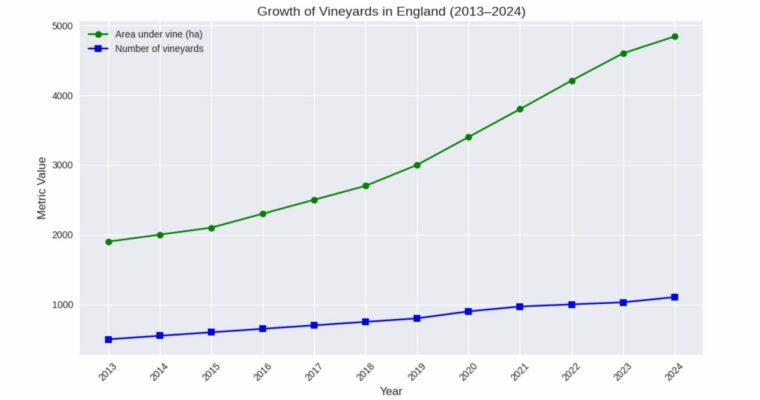
Key facts:
-
Growth in UK vineyard area over the last 15 years: 350%
-
Number of vineyards in the UK: 1,100+
-
Total vineyard area in the UK: 4,800 ha
-
Vineyard area within the Kent Downs: 1,000 ha
-
Proportion of England’s vineyard area in the Kent Downs: 20%
-
Percentage of Kent Downs currently under vines: 1.5%
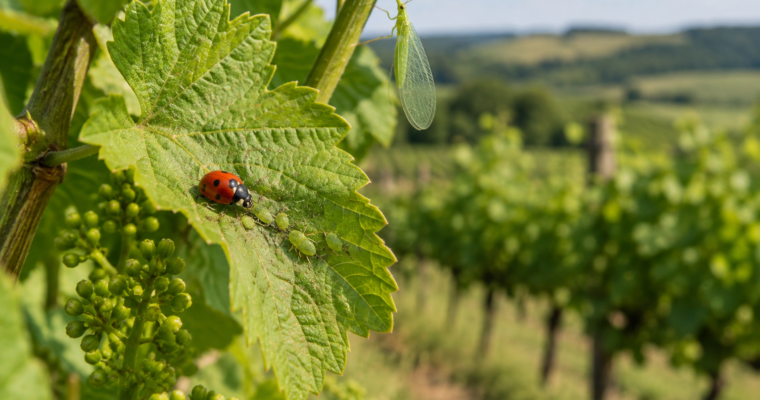
Viticulture represents a successful example of land use diversification and rural enterprise. Only 15–20 percent of vineyard land is planted with vines, while the remaining areas of grassland, hedgerows, and shelter belts offer opportunities to enhance biodiversity, ecosystem services, and landscape connectivity.
Some vineyards in the Kent Downs showcase how viticulture can work together with conservation. Silverhand Estate, for example, is now part of the newly designated North Kent Woods and Downs National Nature Reserve, the first National Nature Reserve in the UK to include a certified organic and carbon-negative vineyard. This demonstrates how sustainable vineyard management can contribute to biodiversity, protect ancient woodlands and chalk grasslands, and support local ecosystems, all while producing award-winning wines and engaging the community.
The rapid growth of viticulture also brings intensive production pressures that must be carefully managed to safeguard the ecological integrity of the Downs. The transition from traditional farming to larger-scale wine production increases reliance on pesticides and fungicides, which can affect sensitive chalk aquifers and rare wildflower populations. The expansion of vineyards and associated permitted development can also pose challenges: tall deer fencing, extensive metal trellising, and large-scale processing facilities have the potential to disrupt the tranquillity and visual continuity of the landscape.
Factors that influence successful integration in the landscape include location, scale and design. Landscapes are most resilient where vineyards are contained by rolling topography, woodland blocks, and established field boundaries, rather than dominating open ridges. Landscape capacity assessments help identify tipping points where vineyard expansion might overwhelm the natural character of the local landscape. By prioritising a landscape-first approach, vineyards can thrive while protecting the natural beauty and ecological integrity that define the Kent Downs.
* Figures are based on English Wine’s Vineyard Database and Kent Downs National Landscape datasets (2025) and may change as the sector continues to grow.
Our Research and Work
The Kent Downs National Landscape team collaborates with vineyard owners, environmental partners, and national bodies to improve viticulture practice and policy.
Through these initiatives, the Kent Downs National Landscape team aims to:
- Support vineyard businesses to implement environmentally sustainable practices
- Enhance biodiversity and ecosystem services within vineyard landscapes
- Inform national policy and funding frameworks with evidence-based research
Our work is informed by extensive research and previous initiatives: