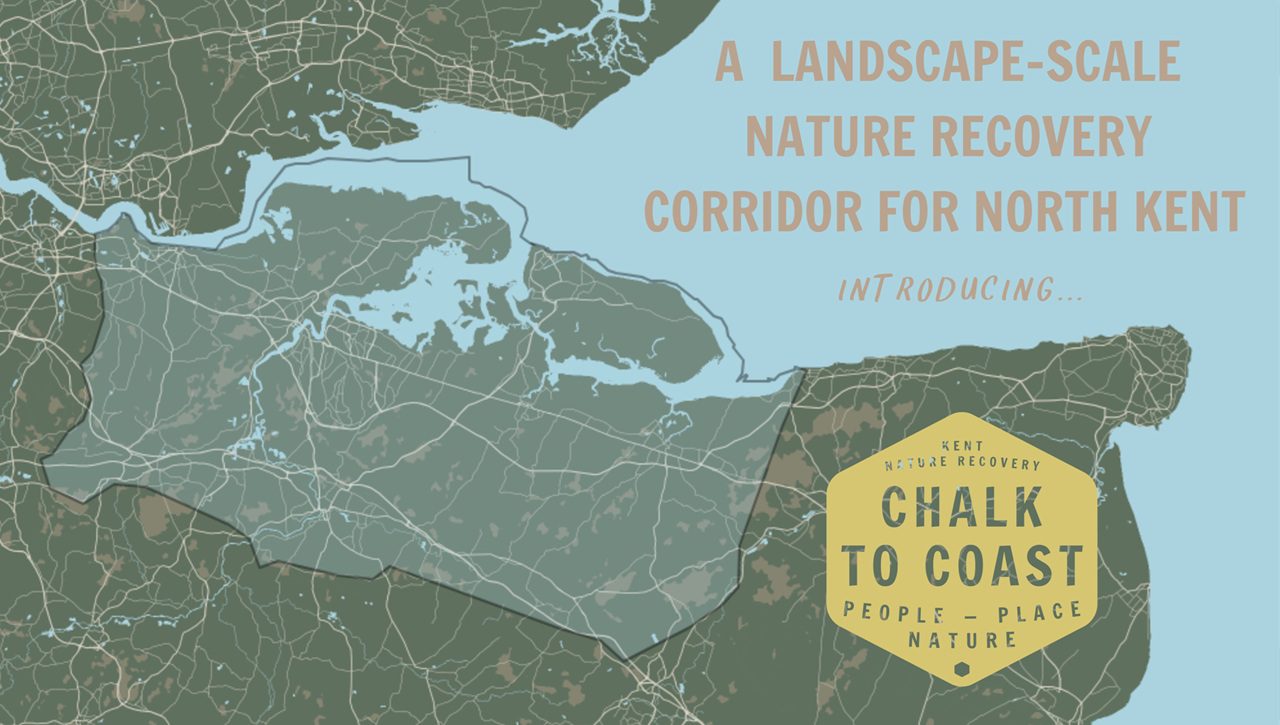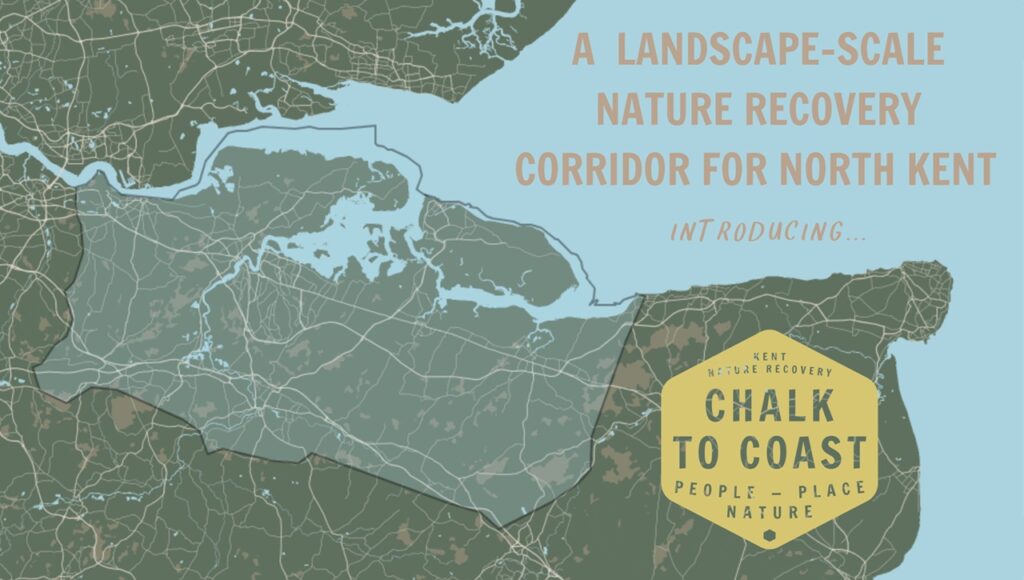
The Chalk to Coast is an ambitious 450 square mile nature recovery project in north Kent, inspired by the success of the Weald to Waves model in Sussex. The initiative aims to reconnect and restore fragmented habitats from the Kent Downs National Landscape to the north Kent marshes and coast, delivering benefits for biodiversity, climate resilience, water and air quality, and local communities.
Led by farmers and landholders
Chalk to Coast is led by a north Kent ‘super-cluster’ of farmers and landholders who work together to improve nature across the whole landscape. With support from the Farming in Protected Landscapes (FiPL) programme, the Kent Downs National Landscape team provided early funding to help the group create its website and interactive map, which launched in March 2025.
In August 2025, further FiPL funding enabled the appointment of a part-time Project Officer and the commissioning of two ecological studies: a small-scale pilot led by Restore and a landscape-scale ecological visioning and natural capital assessment led by Adonis Blue Environmental Consulting.
Understanding the value of nature recovery
Chalk to Coast is creating a Nature Recovery Return on Investment (ROI) framework to explore how restoration work can be measured and valued. The framework will integrate metrics such as biodiversity gain, carbon sequestration, water quality, climate change mitigation, and Social Return on Investment (SROI). This approach aims to bridge the gap between environmental ambition and financial sustainability, attracting private investment and corporate partnerships to scale up restoration across the corridor.
Bringing people, places and habitats together
“For the last few years, Chalk to Coast was just an idea flying around in my head – a dream of connecting Kent’s landscapes from the Downs to the sea,” explains Guy Nevill, Founding Partner of Chalk to Coast and of the Birling Estate.
“FiPL funding has been the turning point, allowing us to turn that vision into a real, coordinated project. It’s about building connections – between habitats, landowners, conservation groups, and communities – so that nature can move freely through the landscape once again. But it’s also a farmer and landholder-led initiative, aiming to support farmers in these challenging times by providing new diversified income streams.”
Growing a network for long-term change
Chalk to Coast is already bringing together a network of farmers, estates, conservationists and community groups who are committed to restoring Kent’s natural heritage. The first strategic stakeholder workshop took place in autumn 2025 and brought together local authorities and national bodies for an early look at the ecological visioning and natural capital work led by Adonis Blue Environmental. Using mapping prepared by Kent Wildlife Trust and insights from the Kent and Medway Local Nature Recovery Strategy, the session highlighted shared challenges such as water scarcity, flooding and the need for stronger, more resilient habitats and communities. It also opened an honest conversation about how partners can work more effectively across the corridor. Additional engagement workshops are planned for winter 2025 ahead of the Ecological Visioning Report and Natural Capital Assessment, which are due in March 2026.
“We’re moving towards a future where nature recovery isn’t just a conservation project, but part of how Kent’s rural economy and communities thrive,” says Guy Nevill. “By restoring and reconnecting the natural heritage of the Kent Downs landscape, we can create spaces rich in wildlife, resilient to change, and deeply valued by those who live and work here. With support from FiPL, Natural England and the LNRS team, we’re laying the groundwork for something that can deliver lasting, landscape-wide change.”
A model for connected conservation in North Kent
As the project grows, Chalk to Coast aims to be a model for large-scale, connected conservation in north Kent and beyond, aligning with the Kent Downs National Landscape vision of bigger, better, and more connected habitats.
This project is made possible through funding from the Farming in Protected Landscapes (FiPL) programme, delivered by the Kent Downs National Landscape on behalf of Defra.